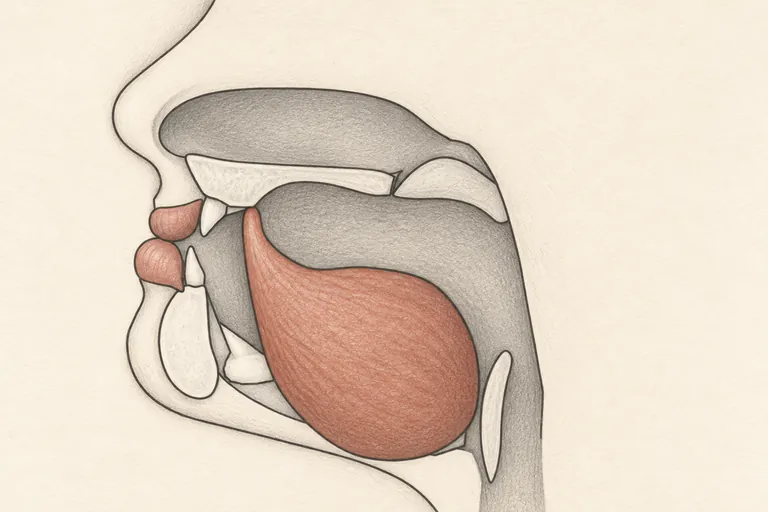
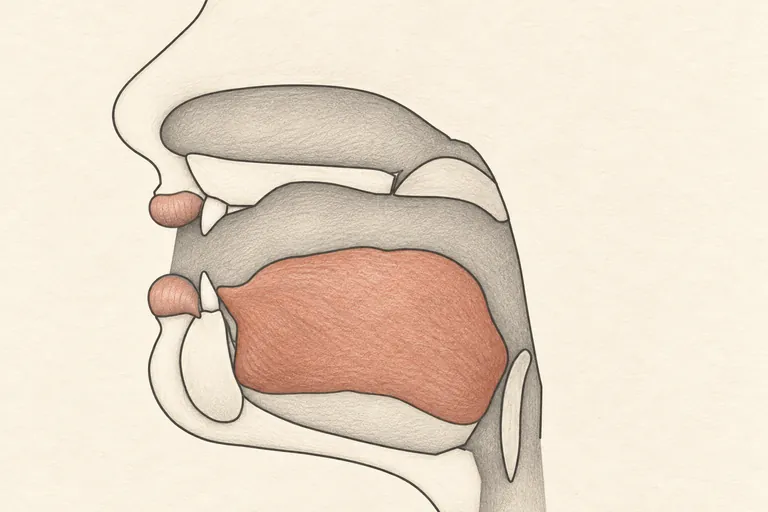
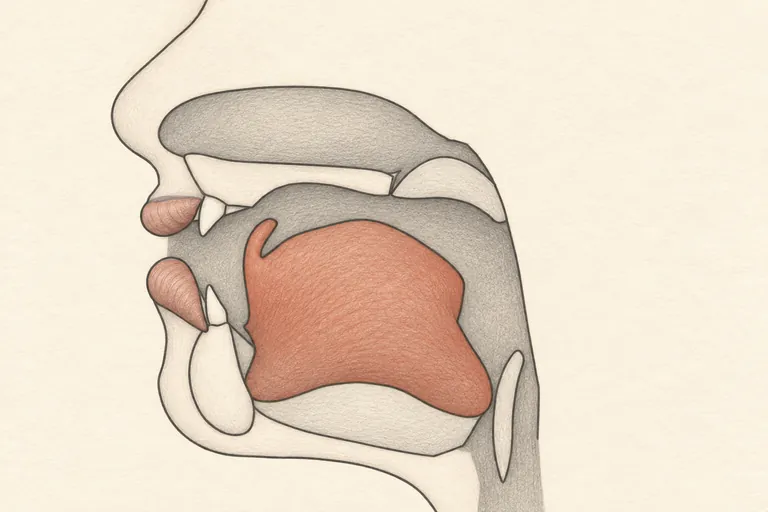
Resting mouth
You likely keep your jaw more closed and your facial muscles evenly, moderately tensed through each syllable, the way Spanish requires for its quick taps and trills and its five pure vowel sounds.
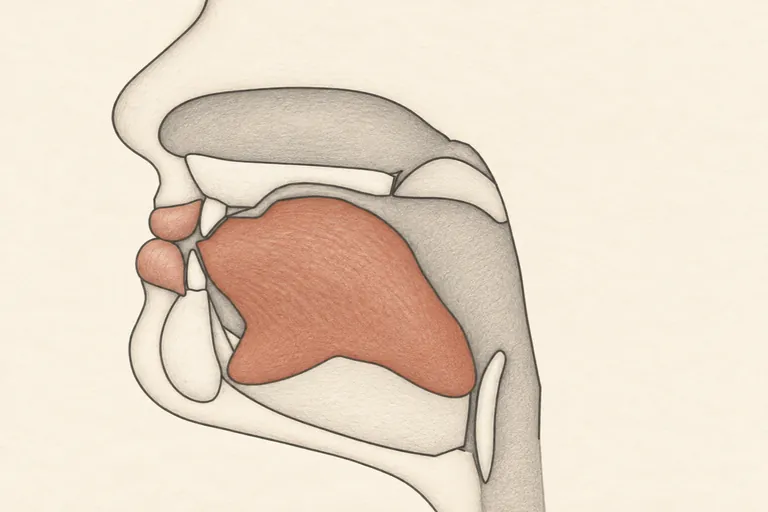
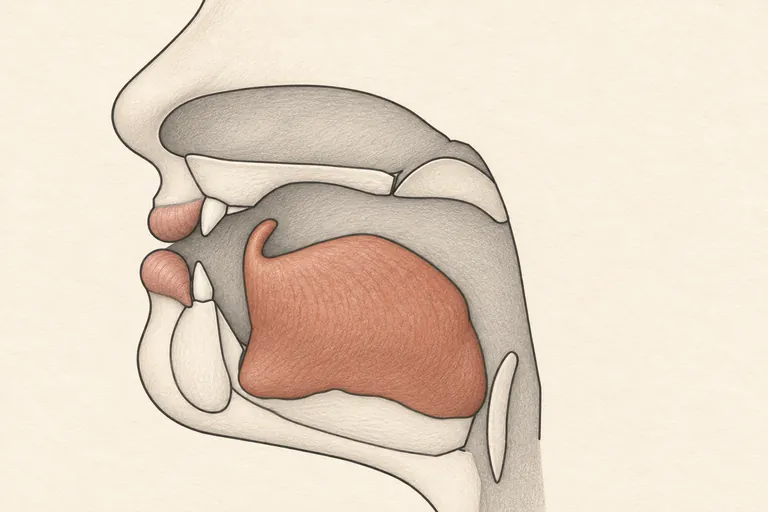
What you probably do
You likely keep your jaw more closed and your facial muscles evenly, moderately tensed through each syllable, the way Spanish requires for its quick taps and trills and its five pure vowel sounds. Your tongue tip naturally rests forward, close to your upper gum ridge, ready for sounds like the tapped r in 'pero' — a position that doesn't leave much room for English's curled-back tongue shape.
How natives do it
General American speakers let the jaw hang looser and open more freely, keep the lips mostly neutral with only slight rounding for 'oh' and 'oo' sounds, and rest the tongue body lower and further back in the mouth. Crucially, the tongue tip stays curled slightly upward and backward almost constantly, ready to produce the r coloring that appears after most English vowels. Overall muscular effort is lower, favoring smooth, economical movement over crisp precision.
Why it matters
This whole-mouth posture shapes every sound you produce, not just individual vowels or consonants, which is part of why even grammatically perfect English can still sound foreign. Holding onto Spanish's more closed, evenly tensed, forward-tongue setting makes rhotic sounds, vowel reduction, and English's loose rhythm all harder to achieve. Practicing the looser jaw and backward tongue-curl as a baseline posture, rather than switching it on only for individual r sounds, pays off across your whole accent.
How the mouth differs
Spanish keeps the jaw more closed with smaller movements, lips mostly neutral with little habitual spreading, the tongue resting forward near the upper gum ridge ready for frequent taps and trills, and moderate, evenly spread muscular tension across each syllable; English keeps the jaw moderately open and flexible, lips neutral to loosely spread, the tongue body resting lower and slightly retracted with the tip curled back in constant readiness for the pervasive rhotic sound, and overall tension that is low to moderate, favoring economy of movement over precision.
Listen for the pattern
The curled-back tongue posture for English's pervasive rhotic sound, combined with looser overall muscle tension, is one of the first things that marks fluent versus foreign-sounding English for Spanish speakers, independent of any single vowel or consonant error.
Practise it
Reset Your Mouth's Resting Posture
consensus- Look in a mirror and let your jaw hang loose and slightly open, as if about to yawn.
- Relax your lips completely, letting them go neutral rather than rounded or pursed.
- Let your tongue body sink a little lower and pull back slightly from its resting position.
- Curl just the tip of your tongue upward and backward, as if about to say an American 'r', and hold it there for five seconds.
- Release and repeat the whole sequence two more times.
- Say 'Are you ready?' right after the warm-up and notice how loose your jaw and tongue feel.
Success check: Your jaw feels looser and lower than usual, your lips feel neutral rather than rounded, and your tongue tip is already curled slightly back before you start speaking.
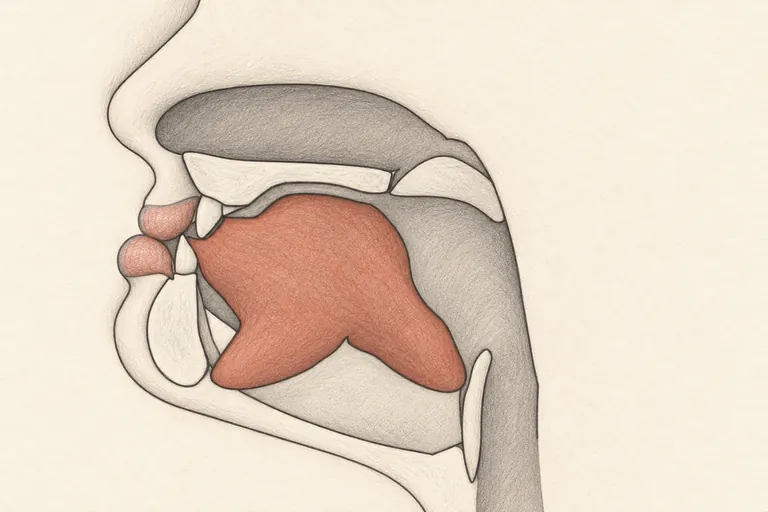
Why this works. A brief articulatory warm-up that lowers and relaxes the jaw, neutralizes lip rounding, and pre-positions the tongue tip for retroflexion resets the whole vocal tract's resting posture away from a forward-high, lip-active setting toward the lower, looser, r-ready American setting, so that all subsequent individual sounds are produced against the correct baseline.
Sources (1)
- Wells, J.C. (1982). Accents of English.
Reader ratings and feedback are coming soon.
Sources (2)
- Wells, J.C. (1982). Accents of English.
- Hualde, J.I. (2005). The Sounds of Spanish. Cambridge University Press.