/e/as in day
You probably pronounce English /e/ as a steady, level vowel with no movement, the way Hindi's long eː works in words like 'ek,' which can make 'day' sound flat or clipped to American ears.
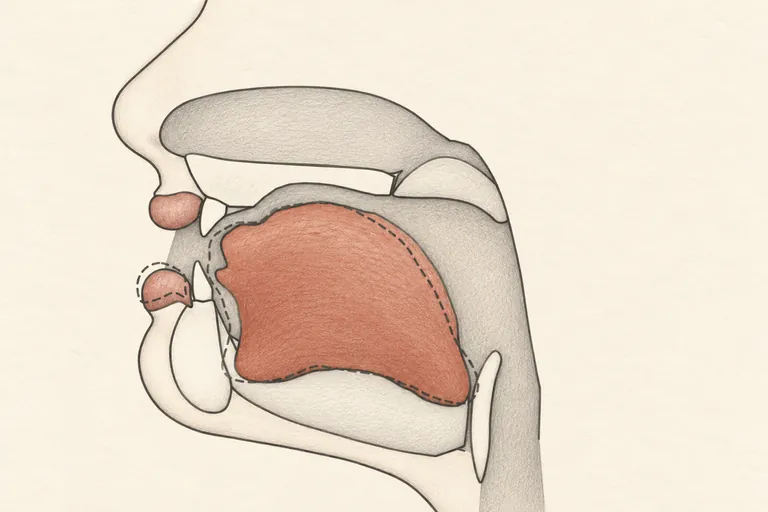
What you probably do
You probably pronounce English /e/ as a steady, level vowel with no movement, the way Hindi's long eː works in words like 'ek,' which can make 'day' sound flat or clipped to American ears.
How natives do it
Americans start in a similar mid-front tongue position but then let the tongue and jaw glide gently upward and forward as the vowel finishes, giving 'day' and 'late' a subtle diphthong quality rather than a flat, steady tone.
Why it matters
A flattened, non-gliding /e/ is one of the clearest giveaways of a Hindi-influenced accent, and if shortened too much it can start to sound like the different vowel /ɛ/, risking confusion between words like 'late' and 'let'.
Hear the difference
Words this touches
Hindi (Modern Standard Hindi) speakers often substitute /eː/.
How the mouth differs
Hindi's eː is a steady long monophthong with no change in tongue position during the vowel, while American English /e/ is typically realized with a diphthongal offglide, the tongue and jaw rising slightly toward /i/ as the vowel finishes.
Listen for the pattern
A flattened, monophthongal 'day' or 'late' is one of the most recognizable features of a Hindi-influenced accent, and can occasionally make the vowel sound closer to /ɛ/ if shortened too much.
Reader ratings and feedback are coming soon.
Sources (1)
- English Pronunciation for Hindi Speakers – Sound Training
- The resource identifies specific phonetic challenges for Hindi speakers, notably the pronunciation of the vowel /a:r/ as in 'car'.
- Training modules are structured around core components: vowel contrasts, word stress, consonant clarity, and natural spoken rhythm.
- The content suggests a modular approach to language learning, offering distinct guides tailored to specific native language backgrounds (e.g., German, Spanish, Hindi).
Loads videos from YouTube via YouGlish; YouTube may set cookies.
late in YouGlish examples