/i/as in see
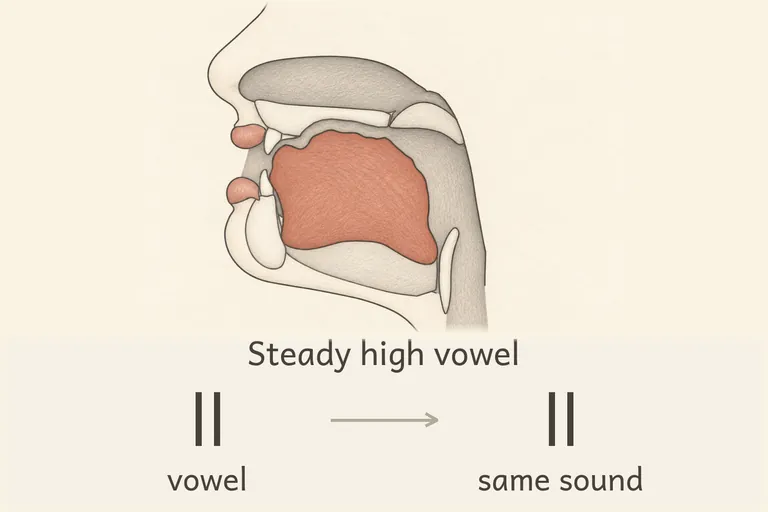
You likely produce a very accurate English /i/ already, since Hindi's long iː is articulated almost identically — tongue high, front, and tense, held steady for the full vowel.
What you probably do
You likely produce a very accurate English /i/ already, since Hindi's long iː is articulated almost identically — tongue high, front, and tense, held steady for the full vowel.
How natives do it
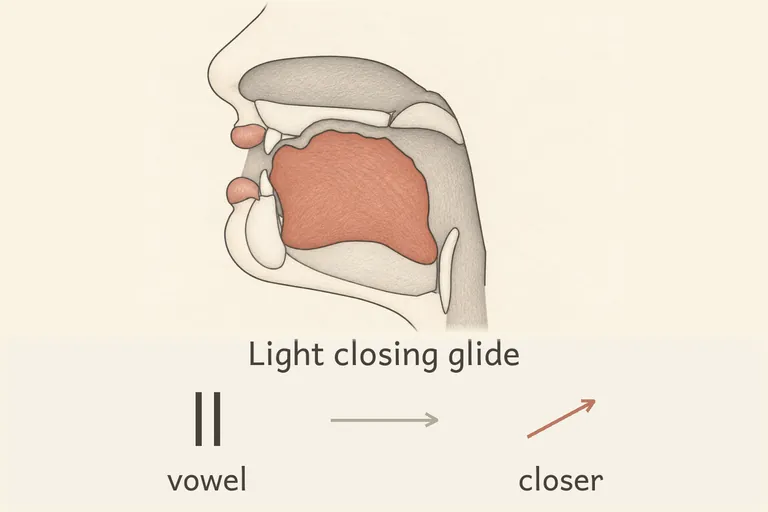
Americans use the same high, front, tense tongue position, sometimes adding a tiny upward glide toward the end of the vowel in stressed syllables, though this is subtle and not essential to get right.
Why it matters
Because this vowel transfers so well from Hindi, you can trust your instincts here and focus your energy on vowels that differ more sharply between the two languages, like /æ/.
Hear the difference
Words this touches
Hindi (Modern Standard Hindi) speakers often substitute /iː/.
How the mouth differs
Hindi's long high front vowel iː is articulated very similarly to English /i/, but English /i/ is often slightly diphthongized with a small offglide in stressed open syllables, a movement Hindi's steadier monophthong doesn't naturally include.
Listen for the pattern
Hindi speakers' /i/ usually sounds accurate to American listeners, though an overly pure, unglided vowel can occasionally sound slightly clipped or foreign in careful speech.
Reader ratings and feedback are coming soon.
Sources (1)
- English Pronunciation for Hindi Speakers – Sound Training
- The resource identifies specific phonetic challenges for Hindi speakers, notably the pronunciation of the vowel /a:r/ as in 'car'.
- Training modules are structured around core components: vowel contrasts, word stress, consonant clarity, and natural spoken rhythm.
- The content suggests a modular approach to language learning, offering distinct guides tailored to specific native language backgrounds (e.g., German, Spanish, Hindi).
Loads videos from YouTube via YouGlish; YouTube may set cookies.
seat in YouGlish examples