Statement intonation
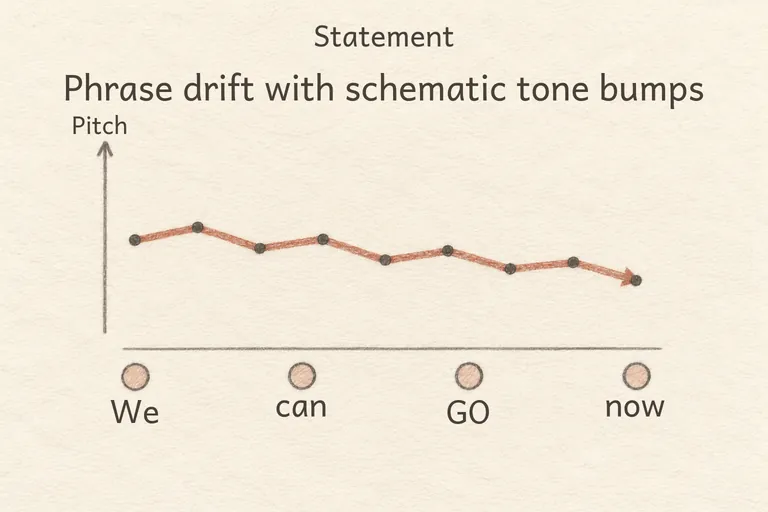
You probably keep your pitch range fairly narrow across an English sentence and let each syllable's natural pitch shape come through, similar to how Mandarin tones ride on top of a gentle overall decline.
What you probably do
You probably keep your pitch range fairly narrow across an English sentence and let each syllable's natural pitch shape come through, similar to how Mandarin tones ride on top of a gentle overall decline.
How natives do it
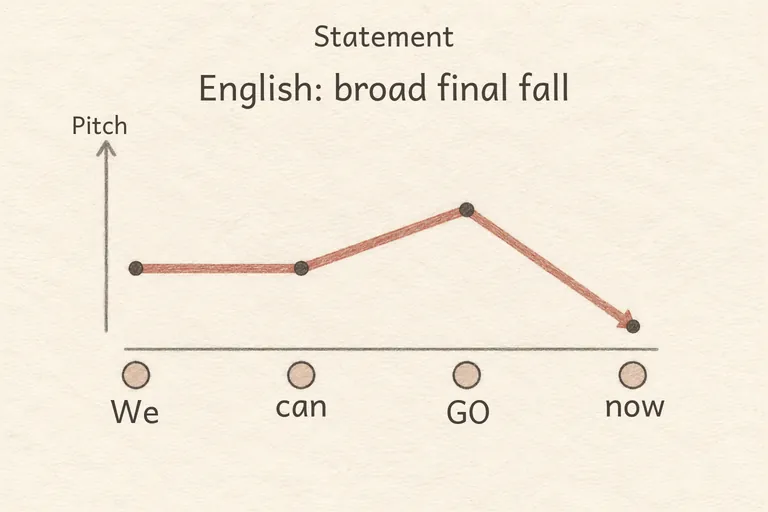
Americans save a clear, noticeable pitch drop for the final stressed syllable of a statement, signaling confidently that the sentence is complete, while keeping earlier parts relatively level.
Why it matters
Without that strong final fall, statements can sound unfinished, hesitant, or even question-like to native listeners, even though you intended a confident, complete statement.
How the mouth differs
English statement intonation uses a broad pitch fall on the final stressed syllable layered over gradual downward drift across the whole sentence; Mandarin's overall drift is similar but much narrower in range because each syllable's own lexical tone must still be completed, leaving little room for a large sentence-level pitch sweep.
Listen for the pattern
Mandarin-accented English statements can sound flatter or less conclusive than native English, since the big final pitch fall that signals 'I'm done talking' is often muted.
Try these sentences
- I finished the report.pitch falls sharply on 'report', signaling completion
- We're going to the meeting now.pitch falls on 'now', marking the end of the statement
Reader ratings and feedback are coming soon.
Sources (1)
- Duanmu, S. (2007). The Phonology of Standard Chinese. Oxford University Press.