AccentMatch.US
About

This is an AI-generated research project, still being refined. It may contain errors. Reader ratings and feedback are coming soon. How this is made

For Mandarin Chinese speakers

Resting mouth

Where the jaw, lips, tongue and throat sit between sounds. Changing this one habit shifts every sound a little.

Mandarin Chinese

sourced
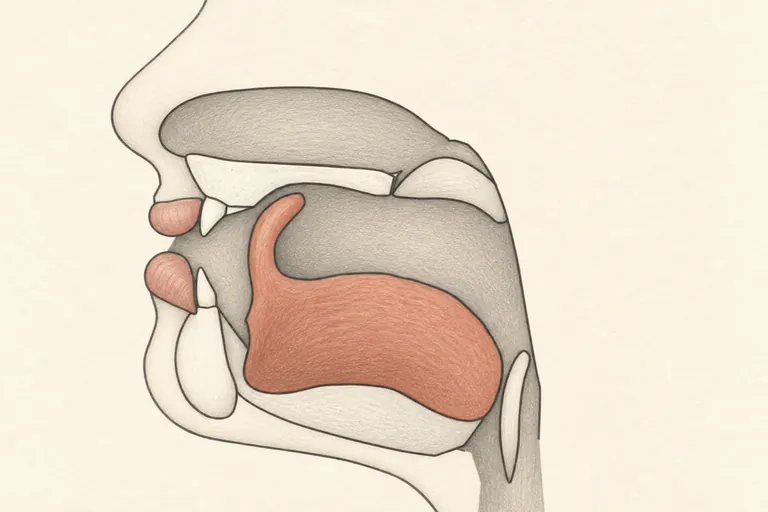
Jaw slightly open, lips neutral, larynx held steady to produce a high, level pitch.
Neutral rest / level toneJaw slightly open, lips neutral, larynx held steady to produce a high, level pitch.
Tongue tip curls back toward the hard palate, a shape not used in English consonants.
Retroflex consonant articulationTongue tip curls back toward the hard palate, a shape not used in English consonants.
Mandarin keeps a fairly compact, neutral mouth shape; the main articulatory 'work' happens in the larynx (pitch/tone) and in tongue-tip curling for retroflex sounds.

Mandarin keeps the jaw and lips fairly neutral and compact — there's less wide opening or lip-spreading than in English. The tongue sits a bit further back and higher at rest, ready to curl its tip backward for sounds like zh, ch, sh, and r, and to round forward for the ü vowel. The real 'work' of Mandarin happens in the throat: the larynx constantly adjusts pitch to produce the four tones, so speaking feels more like singing short melodic shapes on every syllable than like the flatter pitch patterns English speakers use. Overall muscle tension stays moderate and is concentrated in these quick pitch-changing movements rather than in big jaw or lip motions, giving Mandarin its compact, controlled mouth posture.

American English

consensus
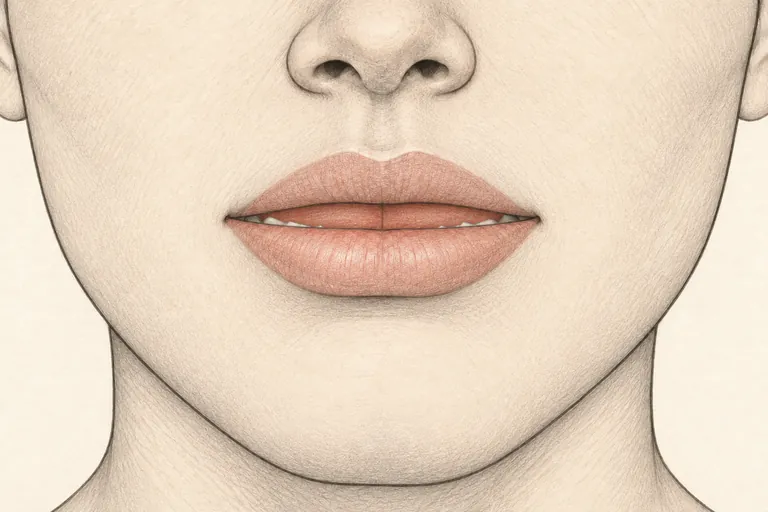
Rest positionMouth gently closed, jaw relaxed and slightly dropped, tongue tip curled slightly back near the lower gum ridge in readiness for the rhotic sound.Looks almost the same as the picture.
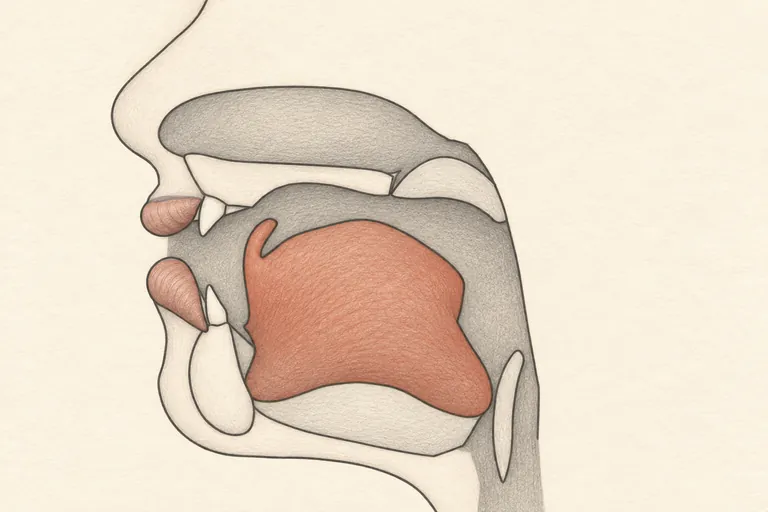
Jaw slightly lowered, lips loosely spread, tongue tip bunched and curled upward and backward without touching the roof of the mouth, as in producing 'r'.
Mid-speech, rhotic vowelJaw slightly lowered, lips loosely spread, tongue tip bunched and curled upward and backward without touching the roof of the mouth, as in producing 'r'.
General American at rest keeps the jaw loose and lips neutral; the signature feature is the tongue curling back for the ever-present 'r' sound.

General American speakers hold their mouths in a fairly relaxed, low-effort position. The jaw hangs loosely and opens moderately for vowels, without tensing. Lips stay mostly neutral or loosely spread, with only slight rounding for sounds like 'oh' or 'oo' — nothing like the pursed lips of French. The most distinctive habit is the tongue: its tip curls slightly upward and back throughout speech, ready to produce the classic American 'r' sound that appears after nearly every vowel. Cheeks stay soft, and the throat feels open rather than tight. Overall, English speech feels loose and economical — sounds glide into each other with minimal extra muscular effort, and stressed syllables get noticeably more energy than the many quickly mumbled, reduced unstressed ones in between.

Side by side

Mandarin ChineseAmerican English
Jaw Small to moderate, fairly quick movements per syllable; overall excursions are less wide than in English, especially on high or level-tone syllables. Moderately open with flexible movement; not habitually clenched or held rigid.
Lips Mostly neutral, with rounding reserved for rounded vowels and glides (e.g., u, ü); habitual spreading is less common than in English. Neutral to loosely spread most of the time; only slight rounding for sounds like 'oh' or 'oo'.
Tongue at rest Sits a little further back and higher than in English at rest, ready to curl backward for retroflex consonants and to round forward for the front rounded ü vowel. Body rests fairly low and slightly retracted; tip stays relaxed near the lower ridge, ready to curl back for the pervasive rhotic sound.
Cheeks Relatively relaxed, with little visible tension. Relaxed, not tensed or hollowed.
Pharynx and larynx The larynx makes frequent, controlled pitch adjustments to shape the level, rising, dipping, and falling tones — more active laryngeal control than typical English intonation requires. Larynx neutral to slightly lowered; pharyngeal space open, supporting the characteristic rhotic quality.
Velum Standard oral–nasal switching; the final nasals n and ng are common and must be kept clearly distinct. Lowers readily for nasal consonants and nasalized vowels before them; otherwise raised.
Overall tension Moderate overall, with tension concentrated in the quick pitch-shaping gestures of the larynx rather than in large jaw or lip movements. Low to moderate; articulation favors economy of movement over precision.
Voice quality Modal, clear voice quality in general; the low dipping tone can add a touch of vocal-fry-like creakiness at its lowest point. Modal voice, sometimes slightly breathy in casual speech; creaky voice ('vocal fry') can appear phrase-finally.
resting mouth

Resting mouth

You likely keep your jaw and lips in a fairly compact, neutral position with the tongue resting high and back, and you do a lot of your pitch work with quick, controlled movements of the larynx, carrying this tense…
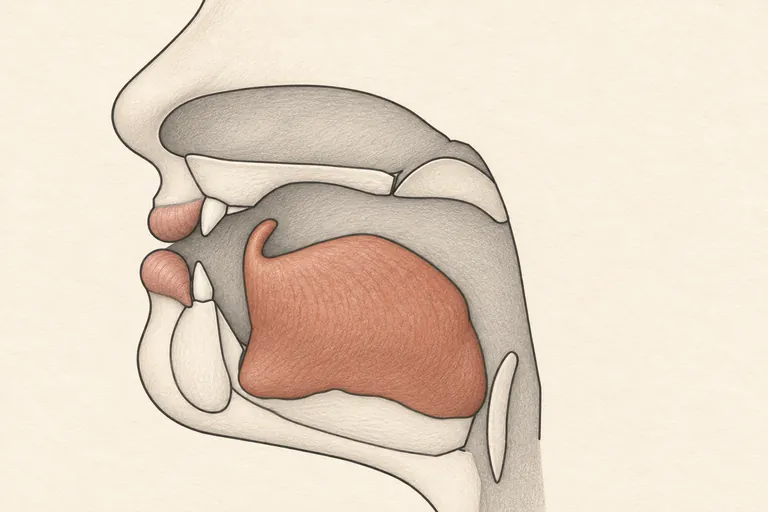
consensus 1exercise
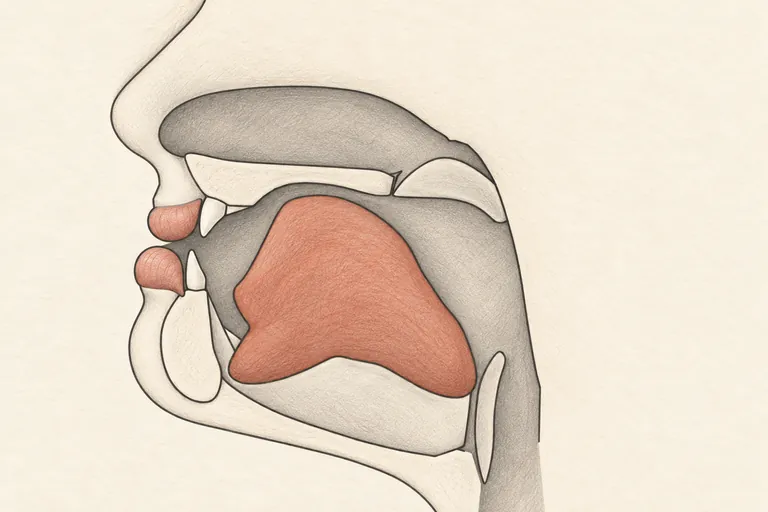
Compact, fairly neutral jaw and lips; tongue sits higher and further back at rest; larynx actively adjusting pitch for tone.
Mandarin habitual postureCompact, fairly neutral jaw and lips; tongue sits higher and further back at rest; larynx actively adjusting pitch for tone.
Looser, more open jaw; lips neutral to loosely spread; tongue tip curled slightly back and up, ready for the pervasive rhotic sound.
General American habitual postureLooser, more open jaw; lips neutral to loosely spread; tongue tip curled slightly back and up, ready for the pervasive rhotic sound.
Mandarin keeps a compact, controlled mouth with active pitch work in the larynx; General American stays loose and open with the tongue tip always ready to curl for r.

What you probably do

You likely keep your jaw and lips in a fairly compact, neutral position with the tongue resting high and back, and you do a lot of your pitch work with quick, controlled movements of the larynx, carrying this tense, economical posture into your English.

How natives do it

Americans relax the jaw more and let it drop further for vowels, keep the lips loosely neutral, and hold the tongue tip in a constant readiness to curl back for the omnipresent r-coloring that runs through the language.

Why it matters

Carrying over a more compact, tone-ready mouth posture into English can make vowels sound slightly tighter and the overall rhythm feel more controlled than the loose, flowing quality native listeners associate with relaxed American speech.

How the mouth differs

Mandarin's habitual posture keeps the jaw and lips compact and fairly neutral, with the tongue resting a little higher and further back, ready for retroflex and rounded-ü articulations; General American keeps the jaw looser and more mobile, lips mostly neutral to loosely spread, and the tongue tip habitually curled for the constant rhotic coloring that runs through the language.

Listen for the pattern

The compact Mandarin mouth posture combined with more active laryngeal pitch control, versus the loose, rhotic-ready American setting, contributes to an overall 'foreign accent' impression even when individual sounds are correct.

Practise it

Reset Your Mouth's Resting Posture

consensus
setting warmup 4 min ★☆☆ mirror
  1. Look in a mirror and let your jaw hang loose and slightly open, as if about to yawn.
  2. Relax your lips completely, letting them go neutral rather than rounded or pursed.
  3. Let your tongue body sink a little lower and pull back slightly from its resting position.
  4. Curl just the tip of your tongue upward and backward, as if about to say an American 'r', and hold it there for five seconds.
  5. Release and repeat the whole sequence two more times.
  6. Say 'Are you ready?' right after the warm-up and notice how loose your jaw and tongue feel.

Success check: Your jaw feels looser and lower than usual, your lips feel neutral rather than rounded, and your tongue tip is already curled slightly back before you start speaking.
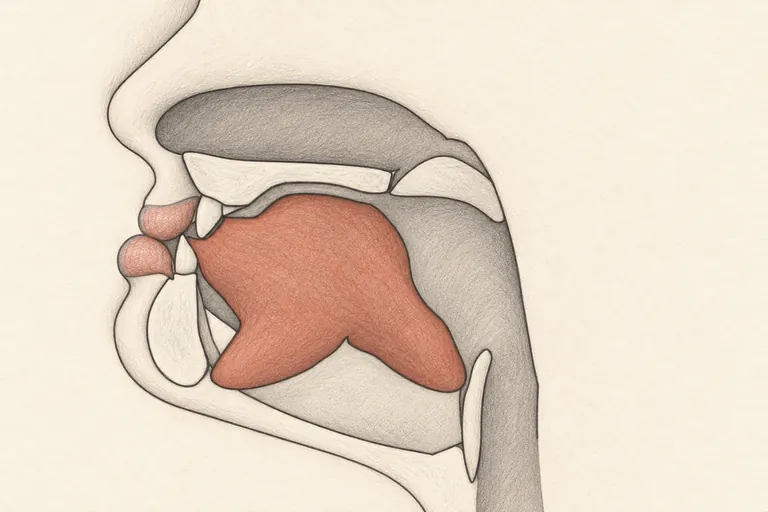
Jaw closed, lips slightly rounded, tongue high and forward.
Before warm-upJaw closed, lips slightly rounded, tongue high and forward.
Jaw loosely dropped, lips relaxed and neutral, tongue tip curled back and ready.
After warm-upJaw loosely dropped, lips relaxed and neutral, tongue tip curled back and ready.
Use this short warm-up to shift your whole mouth posture toward the looser, r-ready American setting before you start speaking.

Why this works. A brief articulatory warm-up that lowers and relaxes the jaw, neutralizes lip rounding, and pre-positions the tongue tip for retroflexion resets the whole vocal tract's resting posture away from a forward-high, lip-active setting toward the lower, looser, r-ready American setting, so that all subsequent individual sounds are produced against the correct baseline.

Sources (1)
  • Wells, J.C. (1982). Accents of English.

Reader ratings and feedback are coming soon.

Sources (2)
  • Duanmu, S. (2007). The Phonology of Standard Chinese. Oxford University Press.
  • Wells, J.C. (1982). Accents of English.