/ɑ/as in hot
You likely use the same Hindi aː vowel quality for both English /ɑ/ and /ʌ/, producing 'cot' and 'cut' or 'not' and 'nut' with very similar vowel sounds, since Hindi doesn't split this territory into two separate…
What you probably do
You likely use the same Hindi aː vowel quality for both English /ɑ/ and /ʌ/, producing 'cot' and 'cut' or 'not' and 'nut' with very similar vowel sounds, since Hindi doesn't split this territory into two separate categories.
How natives do it
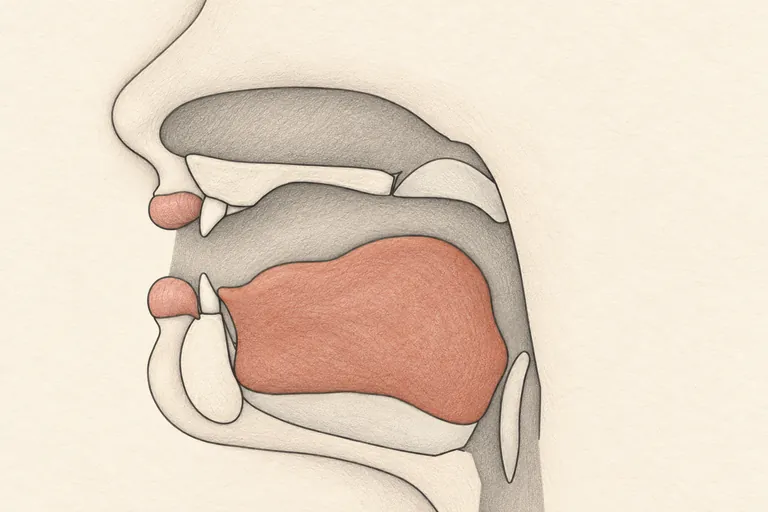
Americans keep /ɑ/ wide open with the tongue low and pulled back, as in 'father,' while reserving a shorter, more central, less open vowel for /ʌ/, as in 'cup,' treating them as two clearly different sounds.
Why it matters
Collapsing these two vowels into one can make common word pairs like 'cot' and 'cut' or 'hot' and 'hut' sound identical, which can genuinely confuse listeners trying to follow fast, casual conversation.
Hear the difference
Words this touches
Hindi (Modern Standard Hindi) speakers often substitute /aː/.
How the mouth differs
Hindi's single low vowel aː covers a wider territory than English, which splits this space into separate /ɑ/ and /ʌ/ categories; Hindi speakers therefore tend to use the same aː quality for both 'father'-type and 'cup'-type English vowels, merging a distinction that matters in English but not in Hindi.
Listen for the pattern
Because one Hindi vowel is mapped onto two separate English vowels, pairs like 'cot' and 'cut' or 'not' and 'nut' can become difficult for American listeners to tell apart in Hindi-accented speech.
Reader ratings and feedback are coming soon.
Sources (1)
- English Pronunciation for Hindi Speakers – Sound Training
- The resource identifies specific phonetic challenges for Hindi speakers, notably the pronunciation of the vowel /a:r/ as in 'car'.
- Training modules are structured around core components: vowel contrasts, word stress, consonant clarity, and natural spoken rhythm.
- The content suggests a modular approach to language learning, offering distinct guides tailored to specific native language backgrounds (e.g., German, Spanish, Hindi).
Loads videos from YouTube via YouGlish; YouTube may set cookies.
cot in YouGlish examples