/l/as in light
At the end of words like 'feel' or 'people', you may replace the tongue-tip touch with a vowel-like sound (something close to 'oo' or 'uh'), because Mandarin syllables never end in l and this gesture has no native model.
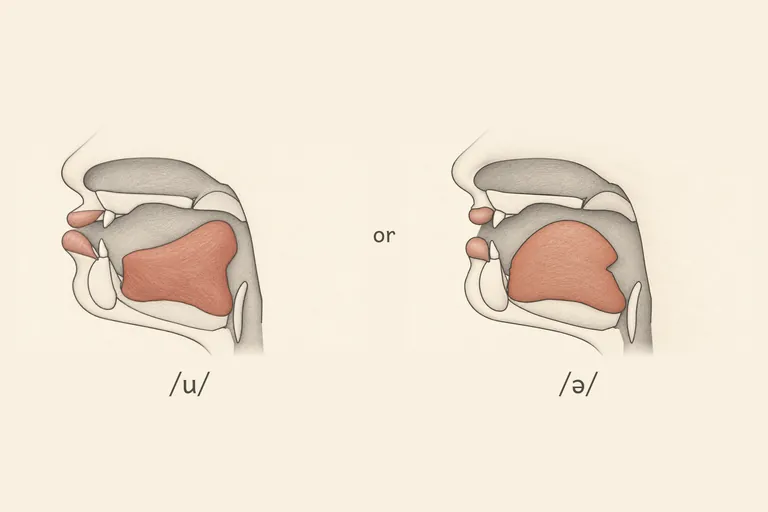
What you probably do
At the end of words like 'feel' or 'people', you may replace the tongue-tip touch with a vowel-like sound (something close to 'oo' or 'uh'), because Mandarin syllables never end in l and this gesture has no native model.
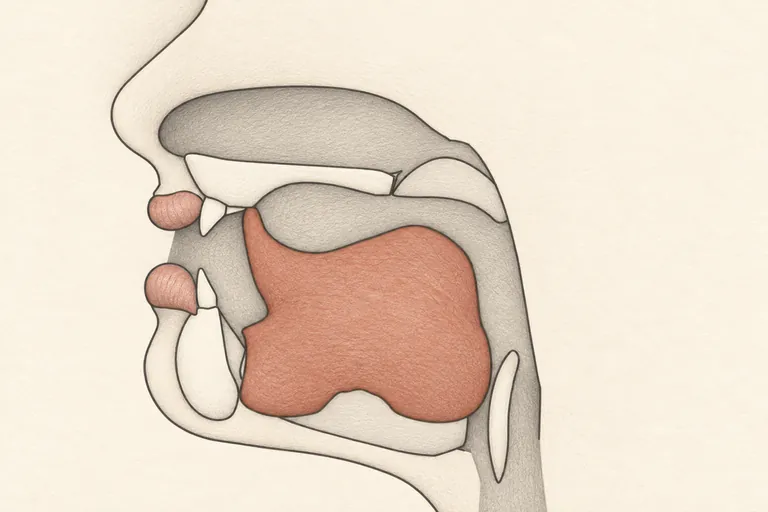
How natives do it
Americans still touch the tongue tip to the gum ridge even at the end of a word, while pulling the back of the tongue toward the throat for a deep, hollow quality — the tip contact never disappears, it just combines with that darker back-of-tongue shape.
Why it matters
Turning final l into a vowel can erase the only difference between words like 'feel' and 'fee', or make 'people' hard to recognize, so keeping that tongue-tip touch is important for being understood clearly.
Hear the difference
Words this touches
Mandarin Chinese speakers often substitute /u, ə/.
How the mouth differs
Mandarin has a clear onset l (as in 'lai') but no dark, velarized coda l, since syllables cannot end in l at all. Facing an unfamiliar sound shape, learners commonly vocalize the English dark l into a back vowel like u or a schwa-like glide, so 'people' can come out closer to 'pipo' and 'feel' loses its tongue-tip contact entirely.
Listen for the pattern
Vocalizing the dark l removes a key tongue-tip gesture English listeners expect at the end of words, which can make words sound vowel-heavy or ambiguous, particularly in words like 'feel' vs 'fee' where the l carries the only difference.
Reader ratings and feedback are coming soon.
Sources (1)
- Pronunciation Challenges Chinese Speakers Face in English — 2020
- Chinese speakers tend to break English consonant clusters by inserting a vowel or dropping one or more consonants because Chinese lacks final clusters and limits initial clusters to two consonants (one being Y/W).
- The dark L /ɫ/ does not exist in Mandarin, leading speakers to replace it with a schwa [ə] or unrounded u sound, often resulting in words like 'people' sounding like 'pipo'.
- Speakers frequently nasalize vowels at the end of syllables instead of producing the alveolar /n/, causing confusion between /n/ and /ŋ/ (e.g., 'sin' vs. 'sing').
Loads videos from YouTube via YouGlish; YouTube may set cookies.
feel in YouGlish examples