/aɪ/as in my
You may carry over the Hindi tendency to turn this kind of vowel sequence into one steady, held sound (similar to the vowel in English 'bed' but longer), so 'time' or 'my' can come out flatter and shorter than expected…
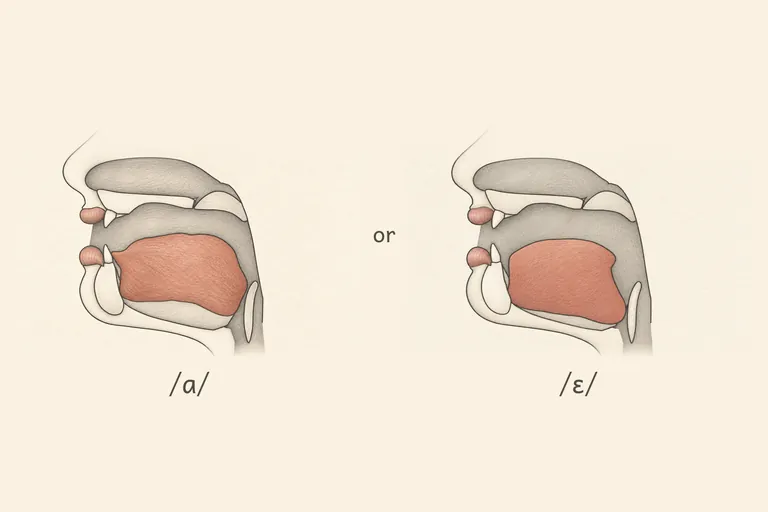
What you probably do
You may carry over the Hindi tendency to turn this kind of vowel sequence into one steady, held sound (similar to the vowel in English 'bed' but longer), so 'time' or 'my' can come out flatter and shorter than expected, without the clear upward glide.
How natives do it
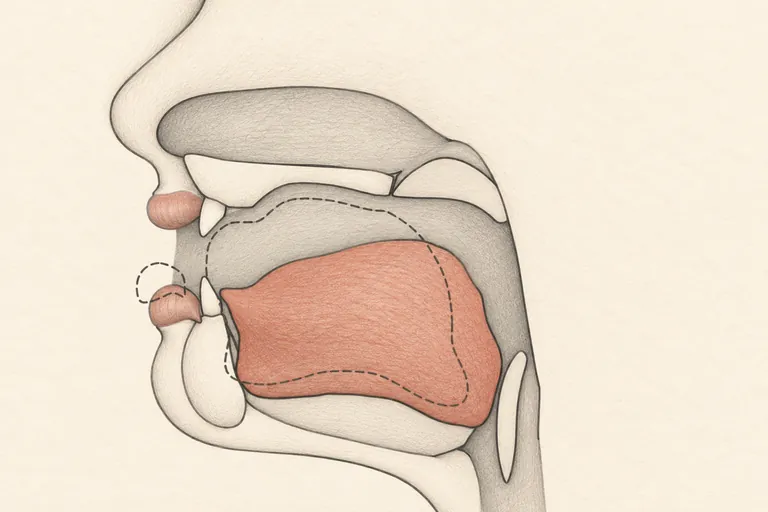
Americans start with the jaw wide open, almost like saying 'ah', and then close the jaw quickly while the tongue slides up and forward toward a near-'ee' position, all in one smooth, fast glide packed into a single syllable, as in 'my' and 'time'.
Why it matters
Flattening this glide can make words sound clipped or occasionally drift toward neighboring vowels, slightly reducing clarity; practicing the fast open-to-close motion, with most of the length on the open start, helps keep common words like 'I', 'my', and 'time' crisp and unmistakable.
Hear the difference
Words this touches
Hindi (Modern Standard Hindi) speakers often substitute /aː, ɛː/.
How the mouth differs
Hindi historically monophthongized its 'ai' sequence into the long vowel ɛː rather than keeping it as a low-to-high glide. Hindi speakers often carry this habit into English, producing a flatter, steadier vowel (closer to aː or ɛː) instead of the dynamic glide from a wide-open jaw up to a near-high front tongue position.
Listen for the pattern
Flattening the glide can make words like 'time' sound shortened or closer to 'tam'/'tame', occasionally blurring the line between this diphthong and neighboring vowels, though context usually resolves the ambiguity for listeners.
Reader ratings and feedback are coming soon.
Sources (1)
- Wells, J.C. (1982). Accents of English.
Loads videos from YouTube via YouGlish; YouTube may set cookies.
my in YouGlish examples