/o/as in go
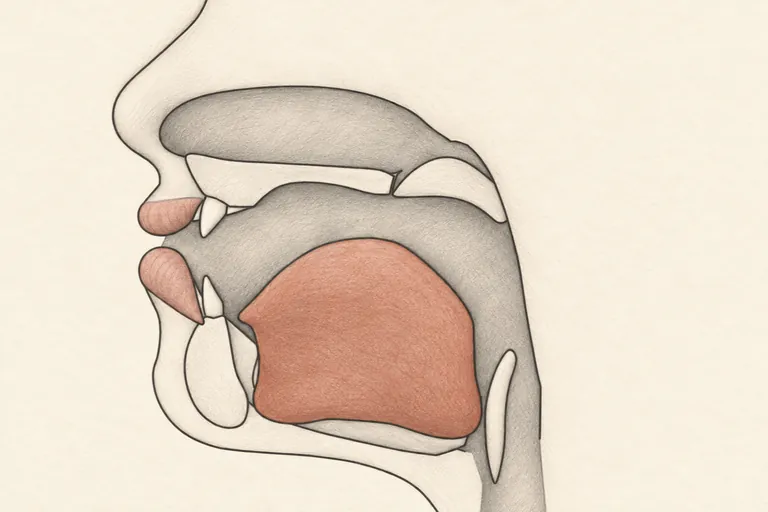
You likely produce this vowel the way you say Hindi 'ओ' — lips rounded in one fixed position and the tongue held steady for the whole sound, so 'go' or 'boat' can come out flat, without any movement during the vowel.
What you probably do
You likely produce this vowel the way you say Hindi 'ओ' — lips rounded in one fixed position and the tongue held steady for the whole sound, so 'go' or 'boat' can come out flat, without any movement during the vowel.
How natives do it
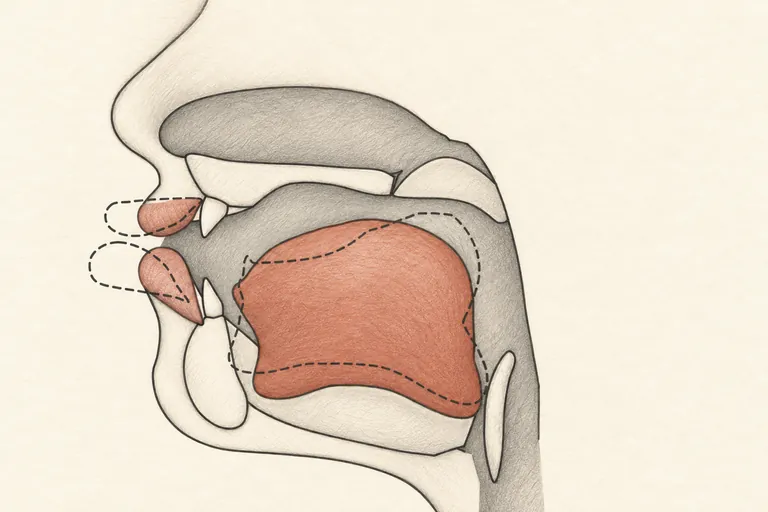
Americans treat this as a small glide: the lips round a little more and the tongue rises and pulls back slightly as the vowel finishes, so the sound subtly slides toward 'oo' by the end, giving 'go' its characteristic rounded finish.
Why it matters
A flat, glide-free 'o' is still understood, but it can make words sound clipped or slightly flat to American ears, and it also risks drifting too close to the 'caught/law' vowel (ɔ); adding the small closing glide helps keep 'coat' clearly distinct from 'caught'.
Hear the difference
Words this touches
Hindi (Modern Standard Hindi) speakers often substitute /oː/.
How the mouth differs
Hindi oː is a pure, unchanging long monophthong. American o is typically realized as a diphthong oʊ, with the tongue and lips gliding upward and further back during the vowel. Hindi speakers often keep the vowel flat and steady, omitting the closing glide that GA listeners expect.
Listen for the pattern
Because the word shape is otherwise intact, listeners usually still understand the word, but the flat, glide-free vowel can sound clipped or slightly 'off' and contributes to the overall sense of a non-native rhythm.
Reader ratings and feedback are coming soon.
Sources (1)
- Wells, J.C. (1982). Accents of English.
Loads videos from YouTube via YouGlish; YouTube may set cookies.
coat in YouGlish examples