/ɔɪ/as in boy
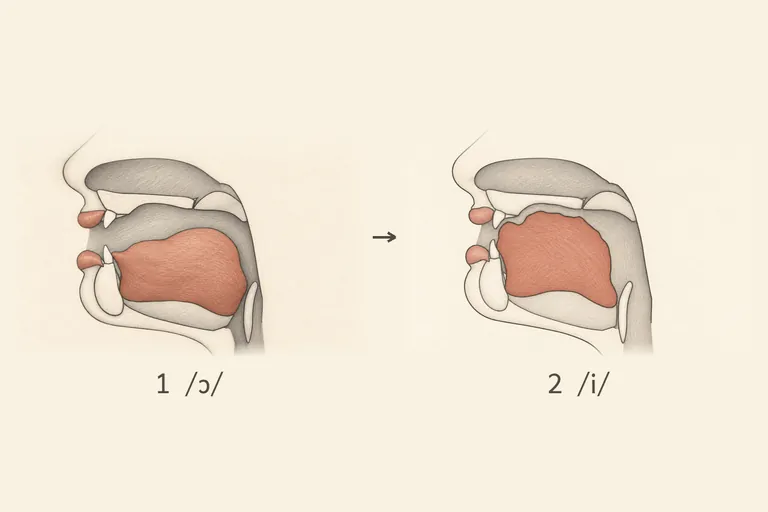
You may produce the two vowel qualities in this sound as more separate and evenly weighted pieces, closer to saying 'aw' and 'ee' back to back, so 'boy' or 'voice' can sound a touch longer or more deliberate than a…
What you probably do
You may produce the two vowel qualities in this sound as more separate and evenly weighted pieces, closer to saying 'aw' and 'ee' back to back, so 'boy' or 'voice' can sound a touch longer or more deliberate than a quick native glide.
How natives do it
Americans blend the whole thing into one fast, smooth syllable: lips start rounded, then quickly relax and spread while the tongue glides up and forward, landing near a short 'ih', all compressed into a single quick movement, as in 'boy' and 'toy'.
Why it matters
A slower, more separated version is still understood, but speeding up and smoothing the glide — especially the lip-unrounding part — makes this diphthong feel like one natural syllable instead of two, which helps words like 'boy', 'coin', and 'voice' flow more naturally in connected speech.
Hear the difference
Words this touches
Hindi (Modern Standard Hindi) speakers often substitute /ɔi/.
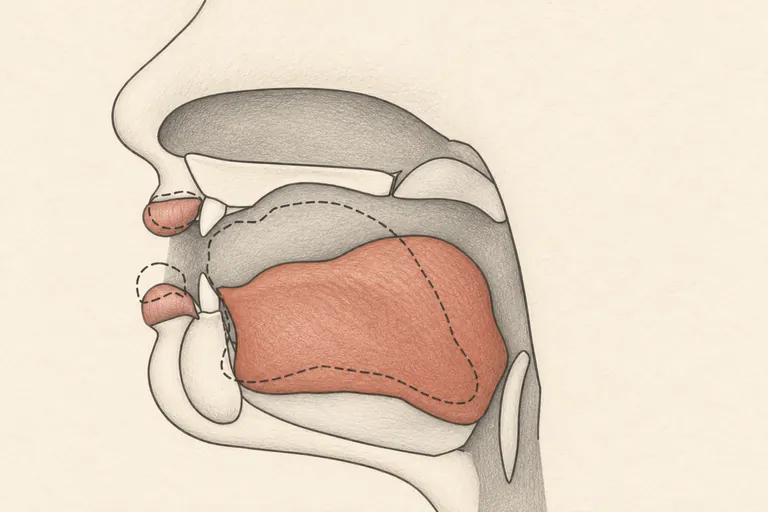
How the mouth differs
Hindi has no native diphthong exactly matching ɔɪ; the sequence appears mainly in loanwords and is often realized as two more clearly separated vowel-like moras (an ɔ-like element followed by a distinct i-like element) rather than the single, smoothly blended glide of English, where the lips unround and the tongue rises quickly within one syllable.
Listen for the pattern
A more separated, two-beat rendering can make words like 'boy' sound slightly longer or choppier than the quick, single-syllable glide American listeners expect, without actually changing the word that is understood.
Reader ratings and feedback are coming soon.
Sources (1)
- Wells, J.C. (1982). Accents of English.
Loads videos from YouTube via YouGlish; YouTube may set cookies.
boy in YouGlish examples